The body performs many different movements every day. These simple, everyday movements, whether you are bending to tie a shoelace or climbing the stairs, all rely on an intricate network of muscles known as the core and pelvic floor. Whenever you move, lift, laugh, breathe deeply, or stabilize, your core and pelvic floor muscles are working together behind the scenes. And when they don’t, chronic issues like poor posture, low back pain or bladder problems occur.
The core and pelvic floor muscles are responsible for your strength, stability and movement flexibility. This blog explains their role as the body’s “foundational system,” and how you can build a stronger, more resilient foundation.
What Exactly is The Core?
The core is often misunderstood as the ‘superficial six-pack abs.’ While those muscles (the rectus abdominis) are a part of the system, the true core is a complex group of muscles around the spine, abdominal viscera and hip.
The anatomical core, however, is best visualized as a three-dimensional “muscular box” or “canister” that encases the entire torso with:
- Abdominals in the front
- Gluteals and paraspinals in the back
- The diaphragm as the roof
- The pelvic floor and hip girdle as the bottom
The primary function of the ‘core’ is to stabilize the spine and pelvis. It helps manage the internal pressures generated by breath and movement.
What is the ‘Pelvic Floor’?
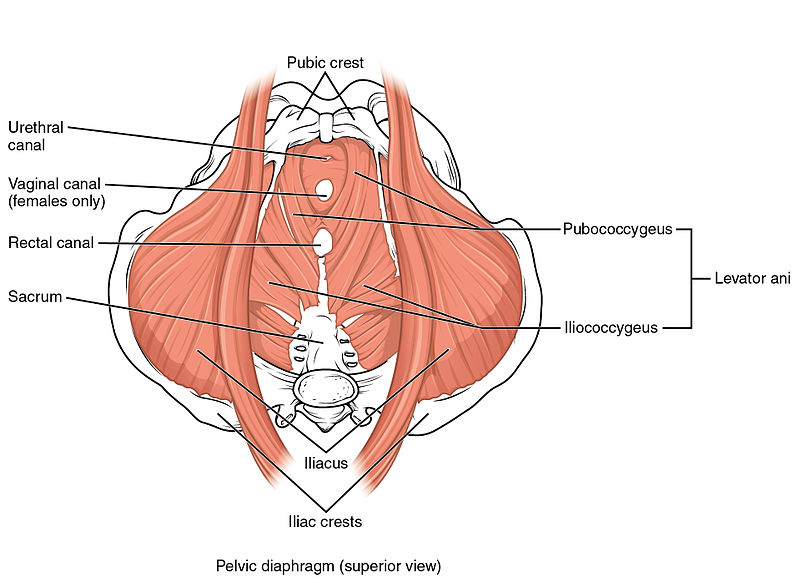
The pelvic floor forms the base of the core, and together they are the foundational system of our body. The pelvic floor has a funnel-shaped structure and attaches to the walls of the lesser part of the pelvis (a bony ring that contains the pelvic organs). It separates the pelvic cavity (consisting of the bladder, rectum, pelvic genital organs and the urethra’s terminal part) and the perineum inferiorly (region including your genitalia and anus).
How Core and Pelvic Floor Muscles Impact Everyday Movement?
Now that you understand what the core and pelvic floor muscles are, the next step is to see how they actually show up in daily life. These aren’t just ‘workout muscles’ or concepts restricted to athletes only. These work quietly in the background, helping you move efficiently. The strong and well-coordinated core and pelvic muscles make everyday tasks such as standing, breathing or laughing effortless and safe. But when it’s weak or disconnected, even simple movements like climbing stairs become difficult and put unnecessary strain on your body.
Both core and pelvic floor muscles work together as a dynamic team to build the foundational support system for your body. The duo provides stability and manages internal pressure, making everyday movements safer and more efficient.
| Function | How the Core & Pelvic Floor Work | Impact on Everyday Movements & Benefits |
| Creating a Stable Foundation | They form a muscular “canister” that stabilizes the torso (Diaphragm = roof, Abs/Back = walls, Pelvic Floor = base). | Walking & Running: Allows for a smooth, efficient gait by preventing excessive pelvic movement and reducing strain on the hips and back. Reaching & Twisting: Protects the lower back by ensuring movement originates from the upper/mid-back. |
| Managing Internal Pressure | The pelvic floor lifts and core muscles brace to manage sudden increases in intra-abdominal pressure. | Lifting, Coughing, Sneezing: Creates a rigid, stable torso to protect the spine from injury under load. Supports Organs: Keeps the bladder, bowel, and uterus securely in place, preventing strain, leakage, or prolapse. |
| Maintaining Posture | They act as primary endurance muscles to hold the body upright against gravity with minimal effort. | Sitting & Standing: Promotes an effortless upright posture, reducing fatigue. Prevents Pain: A strong system prevents slouching and reliance on other muscles, which can lead to chronic neck, shoulder, and back pain. |
When Do Your Core and Pelvic Floor Muscles Need Strengthening?
Strengthening your core and pelvic floor is beneficial at almost any stage of life. But there are specific times and situations when it becomes particularly important.
- Age
- During and After Pregnancy
- Leakage Issues (Incontinence)
- Persistent Back or Hip Pain
- Poor athletic performance
A strong core and pelvic floor make the foundation of all powerful movements performed by athletes and active individuals. This system helps transfer force between your lower and upper body, leading to improved running efficiency, heavier lifts and powerful swing-like movements in sports like golf or tennis, all while reducing the risk of injury.
How To Take Control of Your Core and Pelvic Health?
Consulting a pelvic floor physiotherapist is the most effective step you can take to regain control of your core system. They take a holistic approach to treating pelvic floor dysfunctions and strengthening the entire core system. Exercises, manual therapy and education are common methods professionals use to manage your condition.
At Latitude Performance, you can join our 8-week workshop designed for you to connect with your body’s true foundation: your core and pelvic floor. Our physiotherapist will guide you through every session to help you move better, build long-term health and feel stronger from the inside out.
The workshop focuses on empowering you with the knowledge and practical tools to build a strong core system, whether you are pre- or post-natal, new to exercise or simply want to improve overall strength. The workshop starts on Monday, 6th October 2025.
APA Referencing
Kibler, W. B., Press, J., & Sciascia, A. (2006). The role of core stability in athletic function. Sports Medicine, 36(3), 189–198. https://doi.org/10.2165/00007256-200636030-00001
Lee, D., & Hodges, P. W. (2008). Behavior of the linea alba during a curl-up task in diastasis rectus abdominis: An observational study. Journal of Orthopaedic & Sports Physical Therapy, 38(10), 574–582. https://pmc.ncbi.nlm.nih.gov/articles/PMC2617789/
Noll, M., Candotti, C. T., Rosa, B. N., & Loss, J. F. (2022). Association between low back pain and urinary incontinence in women: A systematic review. Revista Brasileira de Fisioterapia, 26(2), 100–112. https://www.scielo.br/j/fm/a/Yww47NfxGv7vTZxtYMCSmLv/?format=html&lang=en
Physiopedia. (n.d.). Core muscles. Retrieved [Month Day, Year], from https://www.physio-pedia.com/Core_Muscles
Physiopedia. (n.d.). Core stability. Retrieved [Month Day, Year], from https://www.physio-pedia.com/Core_Stability
Physiopedia. (n.d.). Pelvic floor anatomy. Retrieved [Month Day, Year], from https://www.physio-pedia.com/Pelvic_Floor_Anatomy
Physiopedia. (n.d.). Low back pain and pelvic floor disorders. Retrieved [Month Day, Year], from https://www.physio-pedia.com/Low_Back_Pain_and_Pelvic_Floor_Disorders
Scholtes, V. A. B., Beelen, A., & Becher, J. G. (2022). The role of the core in rehabilitation: A narrative review. International Journal of Sports Physical Therapy, 17(5), 934–947. https://pmc.ncbi.nlm.nih.gov/articles/PMC9340836/
Weinert, K., & Plappert, C. F. (2025). Pregnant women’s knowledge of pelvic floor and related dysfunctions: A scoping review. Healthcare, 13(8), 847. https://doi.org/10.3390/healthcare13080847
Harvard Health Publishing. (2021, May). The real-world benefits of strengthening your core. Harvard Medical School. https://www.health.harvard.edu/healthbeat/the-real-world-benefits-of-strengthening-your-core
Physiopedia. (n.d.). Pelvic Floor Muscles [Image]. Retrieved [Access date], from https://www.physio-pedia.com/images/0/02/Pelvic_Floor_Muscles.jpg