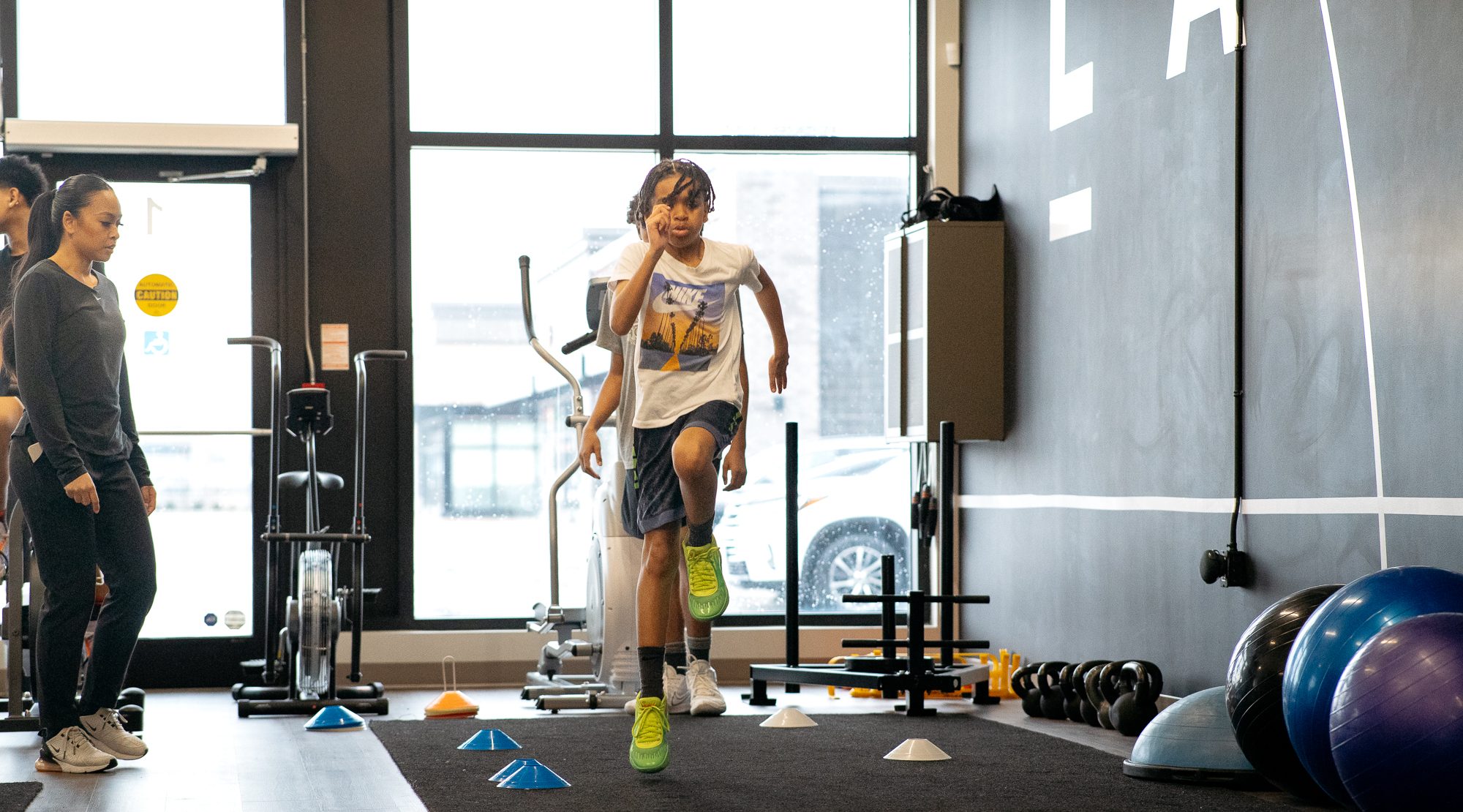
Humans lose muscle mass and strength about 3-8% per decade after the age of 30, resulting in weakness and limited mobility. However, you can still rebuild muscle and get back to the activities you enjoy, regardless of your age or fitness level. All you need is a robust strength training plan and commitment to work through the plan. Strength training builds and maintains muscle mass, which declines significantly by 1.5% between the ages of 50 and 60. Having a strength coach by your side helps. But if you are a beginner, this detailed guide can help you.
Guide To a Personalized Strength Training Workout Plan
A well-structured strength and conditioning program helps build muscles, manage an optimum weight and prevent injuries without exhausting the body. The foundation of the workout plan depends on three key factors- your goals, fitness level/experience and your gym equipment. Beginners should start slow and progress gradually every couple of weeks. This ensures steady muscle building without overtraining.
Let’s begin.
Set Your Goals
What do you want to achieve from strength training?
This determines the types of exercises, the number of sets and repetitions, and the intensity of training needed to achieve those goals.
To make things easier, expert strength trainers in Brampton share what most clients seek from the sessions.
| Goal | Focus |
| “I want to get stronger so that everyday tasks feel easier.” | Functional strength |
| “I want to lose weight and tone up.” | A combination of fat loss, weight training and muscle definition |
| “I just want to feel healthier and more energetic.” | General health and well-being |
| “I want to be able to lift heavier at the gym.” | Maximal stress |
| “I play football and I want to improve my performance.” | Sport-specific strength and power |
| “I have had this injury. Now I want to rebuild my strength and prevent the injury from recurring.” | Injury prevention and rehabilitation |
Could you relate to any of the goals?
Strength training is a multifaceted activity wherein several components work together to build strength, power, muscle mass and endurance. Identify your fitness aspirations to figure out the best strength training exercises for yourself.
Assess your fitness level
Your current fitness level indicates your physical limits, and pushing beyond them too soon can raise your risk of injury. Understanding your baseline helps you choose the right exercises and equipment to train safely and effectively.
The perfect strength training program is effective, safe, enjoyable and sustainable. It allows your body to heal and progress steadily while minimizing the risk of injuries or overtraining.
If you are new to strength training, start with compound exercises like squats, bench press, overhead press or lunges that work multiple muscle groups.
Decide on your training frequency
Training frequency refers to how often you train a specific muscle group of the entire body within a given period. Optimal training with adequate recovery can lead to steady muscle growth and strength gains. Overdoing it, however, hinders progress and may result in injuries.
How often should beginners work out?
Beginners typically need to work out 2-3 days a week with a proper rest period in between. You can do full-body workouts on both days if you choose to work out 2 days a week. If you plan to work out 3 days a week, you can split your training into full body (2 days) and upper/lower muscles (3rd day) to optimize muscle growth and recovery.
Tips to determine the workout frequency for beginners
- Assess your daily activity levels. If it is mostly sedentary/inactive, 2 sessions/week is recommended.
- Decide how much time you can realistically dedicate to strength training every week. Be honest with yourself.
- Listen to your body to understand how you feel after each workout. Consider reducing the number of training days if your muscles feel sore for more than a few days after the sessions, or increase your rest days between workouts to allow your body adequate rest
You can increase your training frequency after at least of month of following the beginner-friendly workout program.
Choose your exercises
You’re aware of how much time you can dedicate to your workouts each day. Now, let’s explore how to maximize that time by choosing the right exercises and performing them in the most effective sequence.
There are two main categories of exercises for beginners.
Compound exercises
Compound exercises involve multiple muscle groups and joints, allowing you to work more muscles in less time. This is a perfect starting point for beginners since most movements mimic real-life activities like lifting, pushing, pulling or squatting.
Here’s a breakdown of the common examples of compound exercises and why they form an integral part of strength training.
| Exercise | Main Muscles Targeted | Secondary Muscles Targeted | Goals Achieved |
| Squats (Barbell, Dumbbell) | Quadriceps, Glutes | Hamstrings, Calves, Core | Strength, Muscle Gain (legs & core), Athletic Performance, Fat Loss |
| Bench Press (Barbell, Dumbbell) | Chest (Pectorals) | Shoulders (Deltoids), Triceps | Strength, Muscle Gain (upper body), Power |
| Overhead Press (Barbell, Dumbbell) | Shoulders (Deltoids) | Triceps, Upper Chest, Core | Strength, Muscle Gain (shoulders), Stability |
| Deadlifts (Conventional, Romanian) | Hamstrings, Glutes, Lower Back | Quadriceps, Traps, Core, Forearms | Strength, Muscle Gain (posterior chain), Power, Core Stability |
| Lunges (Forward, Reverse, Lateral) | Quadriceps, Glutes | Hamstrings, Calves, Core
|
Strength, Muscle Gain (legs), Balance, Stability |
| Dips (Parallel Bar, Bench) | Chest, Triceps | Shoulders | Strength, Muscle Gain (chest & triceps) |
Choose a mix of exercises that target different areas of your body. For example, a combination of squats, lunges and deadlifts can work lower body muscles while bench press, overhead press and rows strengthen the upper body. This is where you need to go back to our first step. Include exercises that will help you achieve your goals.
Isolation exercises
Isolation exercises target only one specific muscle group, resulting in precise muscle growth. The movements involve a single joint and hence are also known as single-joint exercises.
These help if you want to build strength in a specific muscle group. Isolation exercises are also easier and less complex since fewer joints and muscles are involved at a time. You can incorporate isolation exercises to identify and fix muscular imbalances that affect your daily functional movements.
Here are common isolation exercises along with their targeted muscles.
| Exercise | Targeted Muscles |
| Bicep curl | Biceps |
| Triceps Extension | Triceps |
| Leg Curl | Hamstrings |
| Calf Raise | Calves |
| Front Raise | Shoulders (Anterior Deltoids) |
| Lateral Raise | Shoulders (Lateral Deltoids) |
| Plank | Core (Abdominals, Lower Back) |
You can combine compound and isolation exercises based on your goal. Start with compound exercises since they engage multiple muscles in less time. Compound exercises require quite a lot of energy and effort. Thus, it is better to perform them right at the beginning of sessions, when you are fresh and energetic,
Structure your workout
A well-rounded strength & conditioning program consists of a balanced variety of compound and isolation exercises. However, beginners often begin with only the compound exercises. Let’s understand how you should perform the exercises and in which order while minimizing the risk of injuries.
Here are some common terms along with their meanings so you understand this section better.
| Term | Meaning |
| Reps (Repetitions) | A single complete movement in an exercise.
Example: 1 push-up = 1 rep 10 push-ups = 10 reps |
| Sets | A group of repetitions is performed without resting.
Example: 10 push-ups + a break of 1 min + 10 push-ups more = 2 sets of 10 reps |
| Circuits | A series of various exercises that you do back-to-back, with minimal or no rest. |
| Supersets | A set of two exercises that you do back-to-back with no rest between them. |
Select your target rep range
It depends on your primary goal.
If you want to increase maximal strength, 3-5 reps per set is typically recommended. Additionally, you can lift the heaviest weight for one repetition in the correct form to increase overall strength.
For increased muscle size, you can do 6-12 reps per set with moderate weights. This range of repetitions balances your muscle tension and metabolic growth, resulting in muscle growth.
If you want to improve muscular endurance, a slightly higher rep range of 12-15 reps per set with lighter weights is recommended.
It is often best to start with 8-10 reps per set with light/moderate weights before progressing to heavier loads. This builds a solid foundation of strength and muscle control while teaching you the proper form. If the form deteriorates, it’s a cue that your body has reached its limit for the day and needs rest.
Determine your sets
Similar to reps, the ideal number of sets depends largely on your primary goal.
For overall strength, 2-5 sets per exercise will do. Focus on lifting heavy with the lower range of reps in each set.
If you want to increase muscular endurance, 2-3 sets of higher reps (10-12) can be sufficient.
To maximize muscle growth, you can aim for 3-6 sets per exercise with moderate to high reps (6-10). Research on resistance training suggests that a weekly volume of 12-20 sets per muscle group can be beneficial for muscle growth or hypertrophy.
Select the right weight
Selecting the right weight reaps positive outcomes while keeping you safe during the workouts. Choose the weights based on what you want to achieve.
For overall strength, aim for a heavy weight such that the last few reps feel challenging. The last rep with the weight should feel at least moderately hard without affecting your form or causing burnout.
This is known as the rate of perceived exertion or RPE. It is a scale that measures how hard you are working based on how it feels.
For muscle growth, you can use a weight that feels moderately heavy in 6-10 reps. It should allow you to do a couple more reps with more effort, but your form may start breaking down.
A lighter weight, along with a higher range of reps (12-15), can help build muscular endurance. The higher number of reps, however, can cause burn and fatigue in specific muscles.
Split the workouts weekly
The best workout splits depend on your training frequency, experience level, goals and recovery capacity. Beginners can benefit from simpler, full-body workouts while advanced lifters can handle more targeted splits. Schedule full-body exercises non-consecutively in 3 days per week, allowing ample rest days in between.
Here’s a 3-day schedule example:
| Day | Training Approach |
| Monday | Full Body |
| Tuesday | Rest |
| Wednesday | Full Body |
| Thursday | Rest |
| Friday | Full Body |
| Saturday | Rest |
| Sunday | Rest |
Apply Progressive Overload
Progressive overload is increasing the demands you place on your muscles over time. The goal is to force your muscles to work harder, which in turn makes them stronger and more resilient.
Your body adapts to the weight that you lift and the number of reps you do after a period of time..
So, you need to challenge your muscles with increased weights, reps and sets to make your workouts effective. Progressive overload is like a gentle nudge your body needs to step outside its comfort zone and become stronger.
Here is a general guide for beginners to implement progressive overload in strength training.
- Increase the weight gradually once you are comfortable performing the initial reps with good form. If you can easily do 3 sets of 10 reps of squats at 40 kg, try increasing it to 42 kg for your next workout.
- Add an extra set to your exercises to increase the overall volume of your workout, which stimulates muscle growth and strength. If you do 2 sets per exercise, try making it 3 over time.
- If you don’t have access to weights, try increasing the number of repetitions you perform with the same weight. For example, you can try increasing 3 sets of 8 reps of push-ups to 3 sets of 10 reps with good form.
Progressive overload is important for progress. But, it shouldn’t be your sole focus in the beginning. Stick to the workout schedule you prepared and learn the proper form to perform the exercises first. Slowly increase one variable (reps, sets, weights) at a time after your body has completely adapted to the original strength training plan.
Listen to your body
Pay attention to how your body feels after each exercise.
Do your muscles feel sore? Do you feel excessively drained?
These are subtle signs that your body has reached its limits and needs rest. While you need to push yourself to progress, it is also important to be respectful of your body’s limits. This helps avoid injuries and maximizes long-term strength gains.
Track your progress over a period of 3 or 6 months. You may have to adjust the intensity of exercises depending on the improvement in your strength or endurance.
How A Strength Coach & Registered Nutritionist Help?
A strength trainer creates a personalized strength training program based on your current fitness level, goals and limitations. They teach you the techniques for each exercise, ensuring you engage the right muscles and move safely. They are trained professionals who manipulate training variables like sets, reps, weight, rest periods, and exercise selection to optimize your results and avoid plateaus. If there are muscle imbalances or weaknesses that could possibly cause injuries, the coaches can identify those and guide you through rehabilitation.
A well-balanced diet lets you make the most of your workouts. The right nutrients optimize overall health, support muscle recovery and fuel your workouts. So, in most gyms, strength trainers work with registered dieticians to address both training and nutritional aspects of your fitness journey. This coordinated approach helps prevent overtraining and nutrient deficiencies, providing you with comprehensive support.
References
- Centers for Disease Control and Prevention. (2022, October 6). Strength training for older adults. https://www.cdc.gov/physicalactivity/basics/older_adults/strength-training.html
- Harvard Health Publishing. (2021, July 6). Strength training builds more than muscles. Harvard Medical School. https://www.health.harvard.edu/staying-healthy/strength-training-builds-more-than-muscles
- Healthline. (2023, July 28). Weight training for beginners: Everything you need to know. https://www.healthline.com/health/fitness-exercise/weight-training-for-beginners
- Healthline. (2023, August 30). How to build muscle: The 4-day split workout. https://www.healthline.com/health/fitness/build-muscle-4-day-split
- International Sports Sciences Association. (n.d.). How to split up your strength training days for the best results. https://www.issaonline.com/blog/index.cfm/2021/how-to-split-up-your-strength-training-days-for-the-best-results
- Mayo Clinic. (2021, October 5). Strength training: Get stronger, leaner, healthier. https://www.mayoclinic.org/healthy-lifestyle/fitness/in-depth/strength-training/art-20046670