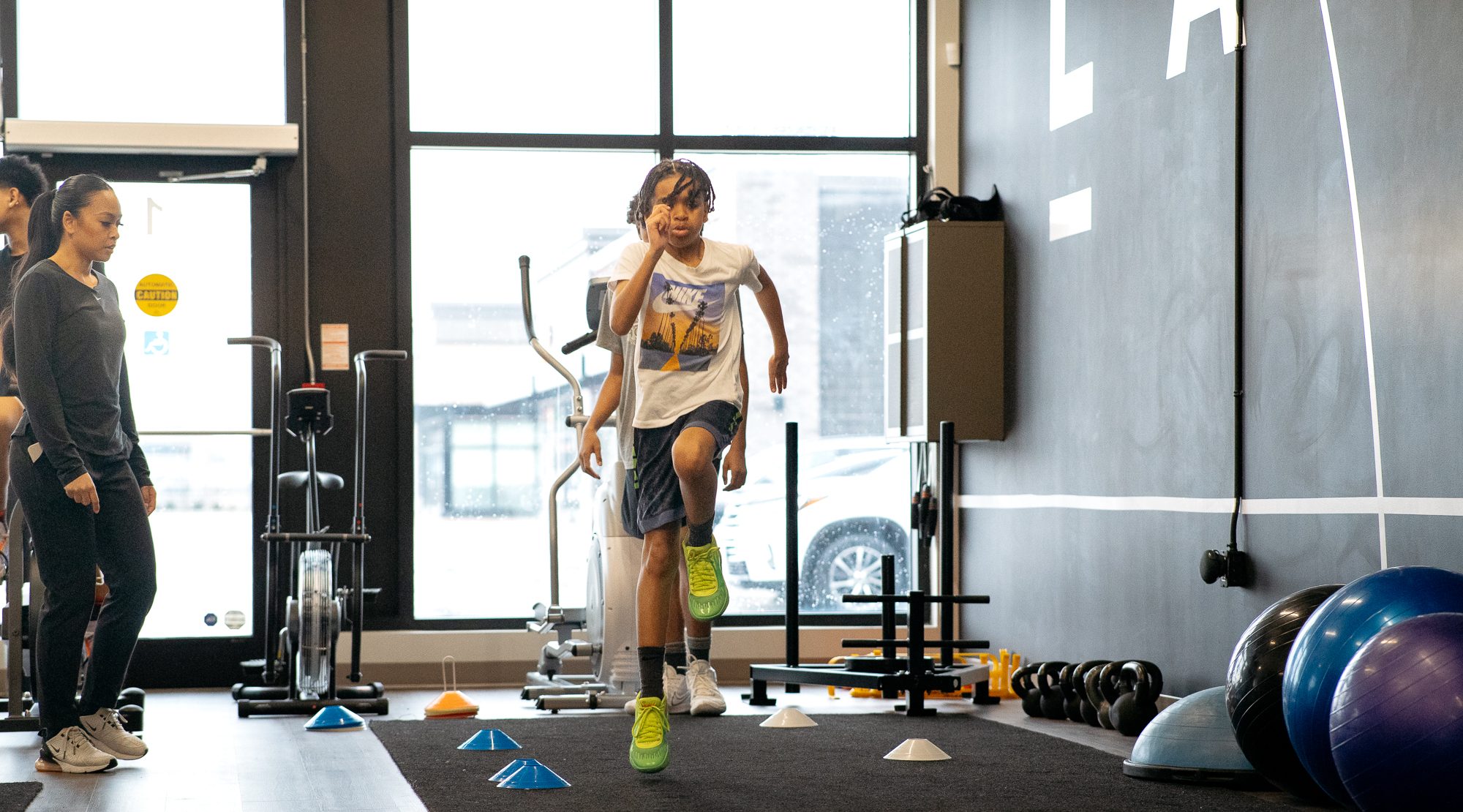
Deciding on the number of workout sessions is highly individualized. The right strength training frequency depends on your fitness goal, how much time you can commit to the workouts and your activity level. While beginners typically train 2-3 days a week, intermediate and advanced clients need at least 5 training days a week. Studies suggest that it is not the training frequency but the total weekly training volume (sets * reps * weights) that shows significant results. You should also understand the difference between optimum training and overtraining. One makes you stronger, and the other may injure your muscles. Let’s learn how to keep our workouts balanced.
Weekly Strength Training Frequency
How experienced are you in strength training?
Consider this as a starting point to decide the number of days in a week you should work out.
Strength training stresses your muscles significantly. Adequate rest and nutrition help repair and rebuild your muscles, making them stronger.
So, you can schedule workout days based on how much stress your muscles can handle each day and the time it takes to recover after each training. Ideally, you should allow 1-2 days of rest between workout sessions to allow for muscle recovery. Check out this general recommendation on strength training frequency for different fitness levels.
How many days a week should I work out as a beginner?
Beginners are individuals with less than six months or no prior experience with consistent strength training. At this stage, your muscles need adequate rest between sessions to recover and grow stronger. Two full-body workouts per week are sufficient to build a solid foundation; however, training three days per week is ideal, especially if you’re already active on other days or exercising regularly.
How often should intermediates work out?
You are considered an intermediate if you have at least 6 months of experience in strength training. That means your body has built a better foundation for strength and endurance and is ready for new challenges. Training specific muscle groups 3-4 days/ week with 2-3 rest days in between yields optimum results for intermediates.
What is the optimal number of strength training days for someone at an advanced level?
If you have experience in consistent strength training for 2+ years, your body has built the capacity to withstand heavier loads and hence needs less resting time to recover. Typically, advanced strength training involves 4-6 days of workout per week with 0-3 rest days in between.
The training level determines how much rest you need between the sessions while targeting the same muscle groups. Beginners need more time for their muscles to recover as their body hasn’t adapted to the current demands of the exercises yet. However, with time and consistency, the body adapts to the new demands and enables you to take the training to a new level.
How often should you work out each week?
According to WHO guidelines, children and adolescents (aged 5-17 years) should engage in at least 60 minutes of physical activity weekly. Adults (aged 18-64 years) should do at least 150-300 minutes of moderate intensity exercise throughout the week. You can split the workouts into 2-3 days a week, depending on your body’s healing capabilities. A certified strength trainer can guide you about how much exercise is right for you to achieve results without injury.
Strength Training Frequency Based on Fitness Goals
How often do you need to work out for your fitness goals?
Goals don’t have to be specific, like losing 35 lbs or lifting heavier weights. You can do strength training at least once a week to improve your overall well-being. Effective workouts, consistent strength training, and proper nutrition can boost your health, energy levels, and overall mood.
Note: Every individual is unique, and so are their healing capabilities. The below-mentioned recommendations are from a generic point of view and may differ based on the participant’s health needs. For a safe and effective training, you should consult with a trainer first and then develop a routine for yourself.
How often should I work out for general health and well-being?
Generally, it is recommended to engage in 150 minutes of moderate-intensity exercise weekly for cardiovascular health. You can apply the 3-day cardio + 2-day strength approach to train all major muscle groups with enough rest. This contributes to stronger muscles, a stable weight and a sense of wellness.
How many times a week should I work out to lose weight?
According to a new study, working out once or twice a week can burn calories and result in weight loss. A mix of cardio and strength training encourages fat loss and can get you in shape. It is recommended to do 60 minutes full-body strength training targeting the legs, back, chest, core and shoulders in two non-consecutive days, followed by 30 minutes of cardio per week with at least 1 rest day in between the sessions.
How much exercise do I need to build muscle?
Two days of full-body strength training every week are enough for beginners to build muscle. Try weight training for 20 minutes twice every week. The weight should be challenging enough for your muscles that the last 2-3 reps are difficult. Weight should be increased in increments of 2.5- 5 lbs weekly for progress.
How Long Should I Work Out at the Gym?
Your training duration is individualized depending on your fitness level, goal, recovery needs and preferred intensity of workouts. Beginners should start with shorter workouts (about 30 minutes per session) and gradually increase the duration (45-60 minutes) as the body adapts.
According to a 2020 study, participants showed significant improvements in strength after performing just 1 set of 6-12 reps per exercise. Recent reviews, however, confirmed that the more sets you do, the longer your workout automatically lasts.
A typical weightlifting session comprises 7-9 exercises and can last around 20-60 minutes. According to a review, children and adolescents can benefit from weightlifting sessions of less than 60 minutes. Another study revealed that weightlifting sessions of 45-60 minutes were preferred.
You can adjust your workout routine if it gets boring. For example, you can pair two exercises to reduce your overall fatigue and rest periods between exercises. If you are a beginner training 2 days a week, work on your upper and lower body each day in a split workout routine.
Deciding the Right Frequency with A Strength Trainer
Is 2 hours at the gym too much?
Is it bad to work out every day?
You may have several questions in mind while deciding on an appropriate frequency for your training sessions. The frequency and duration of workouts vary depending on your health, current fitness level, fitness goals, time availability and recovery capacity. It is wise to talk to an expert strength and conditioning coach for a safe and effective strength training journey.
A typical session for beginners should comprise 2 days of full-body workouts per week or a total of 150 minutes of exercises (cardio + strength training) throughout the week.
Exercises are crucial for every individual, regardless of age or fitness level. A certified strength coach can create a personalized training plan that aligns with your goals while respecting your body’s recovery needs and limitations.
References
- Centers for Disease Control and Prevention. (2022, March 17). Benefits of physical activity.
https://www.cdc.gov/physicalactivity/basics/pa-health/index.htm
- Centers for Disease Control and Prevention. (2022, April 6). Physical activity for a healthy weight.
https://www.cdc.gov/healthyweight/physical_activity/index.html
- Harvard Health Publishing. (2021). Calories burned in 30 minutes for people of three different weights. Harvard Medical School.
https://www.health.harvard.edu/diet-and-weight-loss/calories-burned-in-30-minutes-of-leisure-and-routine-activities
- Steele, J., Fisher, J., Skivington, M., & Batterham, A. M. (2020). A higher effort-based paradigm in physical activity and exercise for public health: Making the case for a greater emphasis on resistance training. Sports Medicine, 50(6), 1051–1065.
https://link.springer.com/article/10.1007/s40279-019-01252-1
- American College of Sports Medicine. (2021). Resistance training for health and fitness.
https://www.acsm.org/docs/default-source/files-for-resource-library/resistance-training-for-health-and-fitness.pdf - World Health Organization. (2020). Guidelines on physical activity and sedentary behaviour.
https://www.who.int/publications/i/item/9789240015128
- Schoenfeld, B. J., Grgic, J., Ogborn, D., & Krieger, J. W. (2017). Strength and hypertrophy adaptations between low- vs. high-load resistance training: A systematic review and meta-analysis. Journal of Strength and Conditioning Research, 31(12), 3508–3523.
https://journals.lww.com/nsca-jscr/fulltext/2017/12000/strength_and_hypertrophy_adaptations_between_low_.28.aspx