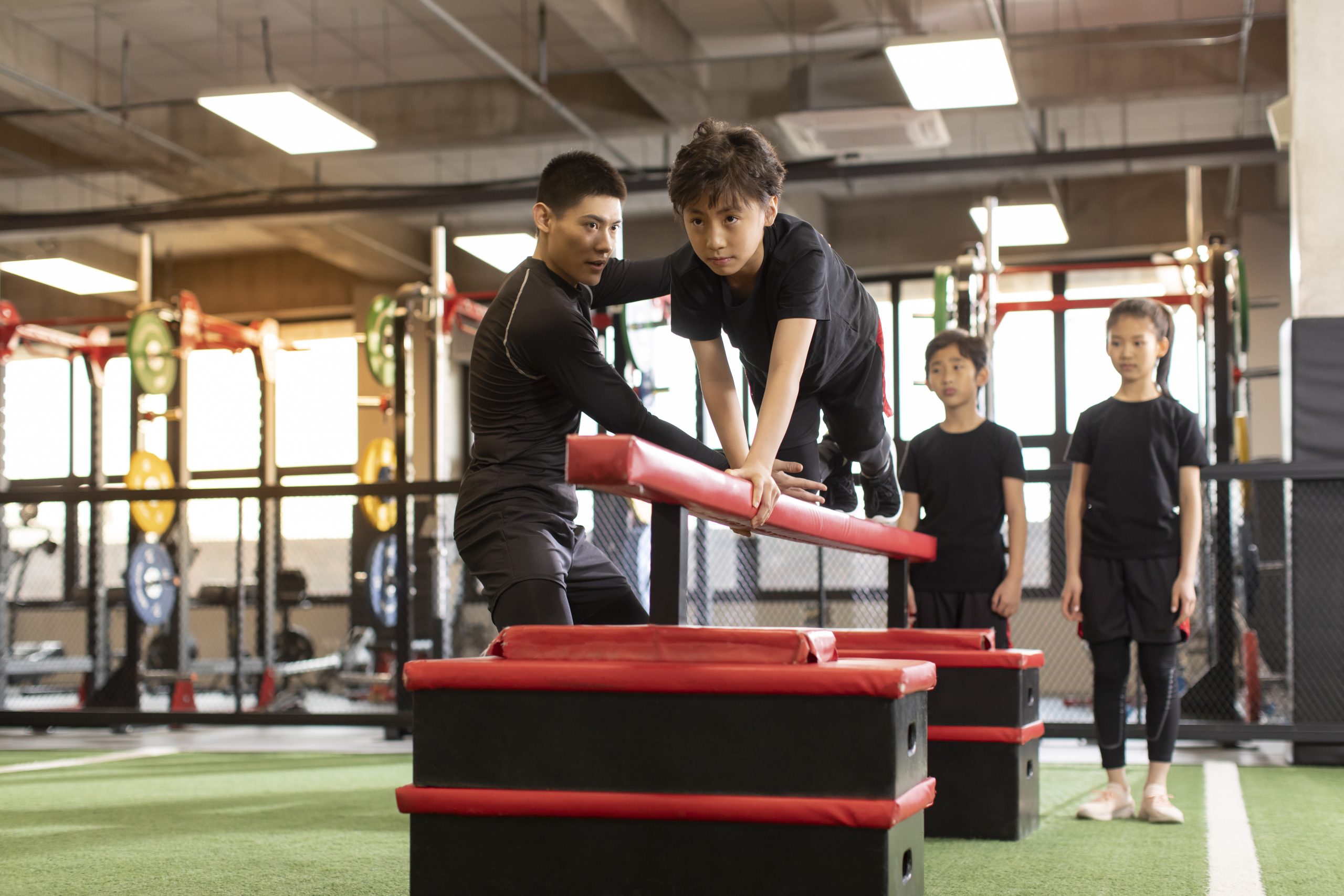
Strength and conditioning (S&C) is a specialized discipline in sports and fitness that personal trainers use to improve movement patterns and overall physical performance. Based in sports science, it involves a wide range of exercises that work on your skills, such as mobility, strength, endurance, power, speed, agility, stability and performance. Unlike general exercises (which focus on burning calories or getting a sweat on), S&C training is about improving performance for a specific physical goal or sport. Whether you are a runner aiming for a personal best in the marathon or a youth athlete chasing a scholarship, strength & conditioning helps build the necessary foundation that prevents injuries and fatigue.
What Exactly is Strength and Conditioning?
‘Strength and conditioning’ are often used together in a gym setting. But each is a unique, distinct pillar of human performance and athletic development. It is crucial to understand what each of these two concepts means, especially if you are training for sports performance, longevity and injury prevention. They trigger completely different biological systems in your body.
For example, consider your body as a high-performance car. So, strength is your horsepower. It determines how much force you can produce. On the other hand, Conditioning is your fuel efficiency. It determines how often you can repeat that force.
Strength training
Strength training is the process of increasing the ability of your musculoskeletal system (bones, muscles and tendons) to produce force against an external resistance. The primary goal is Mechanical Adaptation. When you do strength training, you are increasing the size of your muscle fibres and the thickness of your tendons. So you are convincing your central nervous system and the skeletal system to handle heavier loads during this process. The major movements involved are squats, deadlifts, rows/pull-ups and presses.
Conditioning
Conditioning is about training specific energy systems to ensure that you have the energy to use your maximum strength when it counts. It improves your heart’s ability to pump blood and your cells’ ability to clear out waste products (like lactate) so you don’t “burn out.”
Why combine both?
Strength determines how much force you can produce. Conditioning determines how often you can repeat that force. Prioritizing one modality while neglecting the other can create a specific physiological deficit that can limit performance and increase injury risk.
A ‘strength-only’ regime builds strong muscles, but its cardiovascular system cannot efficiently supply oxygen to the muscle tissue during sustained effort. This results in rapid fatigue during daily activities (like climbing stairs) and poor recovery rates between bouts of physical exertion.
The ‘conditioning-only’ trainee builds an efficient cardiovascular system but lacks musculoskeletal density and force absorption capabilities. Without adequate muscle strength to act as a shock absorber, the ground reaction forces (absorbed by the body during running or jumping) are transferred directly to the joints and bones, significantly increasing the risk of overuse injuries like ligament strains or stress fractures.
Therefore, you need the right balance between strength and conditioning to ensure your body is strong enough to withstand physical stress and efficient enough to sustain it. Combining strength and conditioning helps build a resilient foundation that maximizes both longevity and peak performance.
What are the Scientific Principles of Strength & Conditioning Training?
Strength and conditioning is rooted in exercise science, physiology and biomechanics. It is customized to improve your individual physical performance and prevent injury.
5 Main Pillars of Strength and Conditioning
- Volume is the total amount of work you perform in a session. It is usually calculated as Sets * Reps. It is the primary driver of Hypertrophy (muscle growth). You need to expose your muscle to a sufficient amount of mechanical work to build the tissue.
- Intensity in strength and conditioning refers to the weight on the bar relative to your 1-Rep Max(1RM). It is the primary driver of Strength and Neural Adaptation.
- Volume Load is the mathematical product of your session: Sets * Reps * Weight Lifted. This is the most objective way to track your progressive overload.
- Frequency is how often you train a specific movement or muscle group within a week. It dictates how well you can acquire your skill.
- Rest intervals are the time you spend passively recovering between sets. Often ignored, this crucial variable dictates which energy system you are training, whether for Power or Endurance.
6 Primary Principles of S&C training
Principle of Individuality
Every individual is unique, and so is their response to training stimulus. According to the Principle of Individuality, no two athletes respond to the exact same training stimulus in the exact same way. A training program designed to create an Olympic champion might cause severe injury or fatigue in another athlete, even if they play the same sport. There are several biological and environmental factors that dictate how an individual handles training stress, such as genetics, age of the person, sleep schedule, nutrition, psychological stress and anthropometry (limb lengths of the athlete). This principle allows the trainer to move from a “cookie-cutter” approach to a “client-centred” approach, helping in injury prevention, recovery optimization and response maximization.
Principle of Specificity
In strength and conditioning, the principle of specificity is also known as the SAID principle: Specific Adaptation to Imposed Demands. It states that the body adapts specifically to the type of demand imposed on it. Nothing more. Nothing less. Personal trainers maintain three layers of specificity to ensure the training aligns perfectly with the athlete’s goals.
The exercise must mimic the movement patterns, force angles and range of motion of the goal activity. For example, a squat is more specific in improving vertical jump than a leg extension because squats work on multiple joints (hip, ankle, knee) in coordination, just like a jump. The training must stress the same energy systems as their desired sport or activity does.
Principle of Overload
S&C exercises should be right enough to stress the body beyond its current capacity to adapt. The trainers hence systematically increase the load, volume or intensity over time such that the body works against a stimulus that is greater than what the body is already accustomed to. The trainers prescribe specific strength and conditioning exercises that will disrupt the body’s desire to stay the same (homeostasis) and force it to adapt to a new, higher baseline of performance.
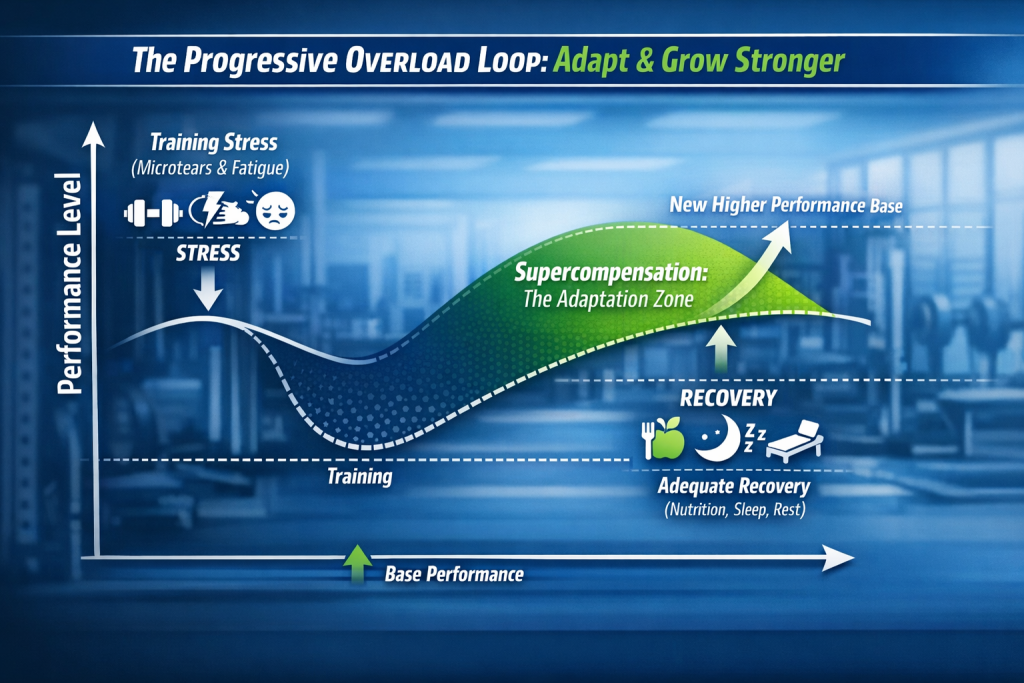
Principle of Progression
Strength and conditioning adhere to the laws of physiology to ensure progress. Progression is the selection of specific exercises based on the trainee’s physical capabilities and the demands of the activity. The exercises shouldn’t be too hard or too easy. The training stimulus, however, must increase gradually and constantly. If the change is too quick, it may result in poor technique, movement inefficiencies and injuries. On the contrary, if the change is too slow, you may see negligible improvements in your performance.
Principle of Diminishing Returns
The Principle of Diminishing Returns states that as an athlete becomes more experienced and conditioned, their progression rate slows down, requiring immense effort for tiny gains. They need to work even harder to make further improvements. This principle explains the relationship between Training Age (how long you have been training) and Adaptation Rate (how fast you can improve). Understanding this prevents frustration for both the client and the trainer. A coach needs to explain to the individual that progress naturally slows down and that is normal. The trainee just needs to work harder to get better.
Principle of Reversibility
According to the Principle of Reversibility, the body will revert to its pre-training state if you stop training or reduce your training stimulus significantly. This indicates that physiological adaptations to training are transient. Scientifically, this process is also known as detraining. Crucially, fitness qualities disintegrate at different rates. Endurance is the first quality that begins to drop within days of inactivity, while Maximum Strength is more resilient, lasting weeks or months. Athletes, of any level, cannot “store” fitness like a battery. Workouts must be consistent. You need to do the right exercises consistently to make steady progress as it is the only way to prevent regression.
How to Make a S&C Program, In General?
Great results don’t happen by accident. They are designed. Here is a general overview of a process used by top strength coaches to customize a strength and conditioning program.
Analysis of Sport & Athlete
Trainers usually start by looking at the sport. What are the common injuries? What are the primary energy systems? Then the trainer evaluates the athlete. Is one leg weaker than the other? Have you lifted for 10 days?
They use data to set a baseline. This might include force plate testing for jump height, sprint timing gates for speed, or movement screens for mobility.
Periodization Design Mapping.
The body needs enough rest and hence cannot train 365 days. So, the trainer divides the training time into ‘periods’ or ‘blocks.’ This structured planning allows you to adapt to the training stimulus without injury and overtraining.
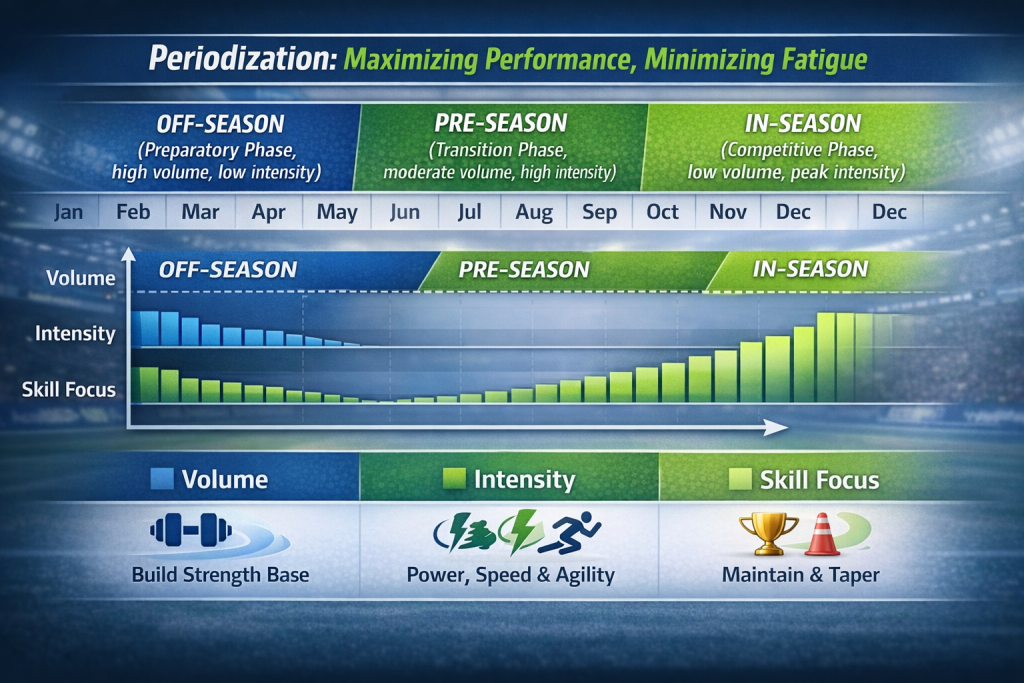
‘How often should you train?’, you may wonder. It depends on the season. For example, off-season may involve 4-5 days of training per week, while pre-season may need 3-4 days per week.
Structuring of Sessions
Now the trainer prepares the daily session, depending on the trainee’s goals, choice of sport and health status. It is crucial to fit in conditioning training without ruining strength gains. Generally, it consists of high days (heavy workouts) and low days that allow steady recovery. This routine helps build strength and endurance safely.
Sport-Specific Strength & Conditioning (S&C): Training Hockey, Cricket, and Field Athletes in the GTA
The kind of sport you are associated with plays a crucial part in determining your workout structure. While the principles of training remain the same, the methods (exercise selection, sets, reps, rest) change.
In off-season hockey training, for instance, the goal of S&C sessions is not just to sweat but to increase your horsepower. So when you get back to the game, you can do it faster and with greater resistance to injury. This game requires explosive power, balance and collision durability. The workout structure is designed accordingly.
Cricket fitness training, on the other hand, would be different. It focuses on building a body that is asymmetrical, rotational and resilient. These qualities are essential for the player to be strong on the landing leg, powerful through the core and capable of throwing a ball from the boundary without injury.
S&C in Youth Athletic Development (LTAD) in Canada
Parents often ask, “Is it safe for my kid to lift weights?
Yes, it is safe provided that it is supervised by a trained professional. Research suggests that strength training in youth sports helps improve the quality of elementary school students at an integral level. According to a journal published by the National Strength and Conditioning Association, youth resistance training has the potential to improve the health and fitness of children and adolescents.
S&C trainers who design a training program can help young athletes train, compete and reduce the chances of injury. They can empower the individual with all the right tools necessary to maintain a healthy, active lifestyle into their adult years.
The Long-Term Athletic Development Model (LTAD) is designed to ensure steady, safe training of youth from early childhood into adulthood. The exercises are customized so every athlete can progress and improve performance appropriately for their age and skill level, even as they get older.
What are the Benefits of S&C Workout?
| Benefit Category | How It Works (The Science) |
| 1. Performance Enhancement | Increases Force Production (Strength) and Rate of Force Development (Power). It improves movement, meaning you use less energy to move at the same speed. |
| 2. Injury Prevention | Bones become denser under stress. Tendons and ligaments thicken to handle load. It also corrects muscle imbalances (e.g., weak glutes) that cause joint pain. |
| 3. Metabolic Health | Muscle tissue is metabolically expensive. Adding muscle increases your Resting Metabolic Rate (RMR) and improves insulin sensitivity (how you process carbs). |
| 4. Longevity & Anti-Aging | Combats Sarcopenia (the natural loss of muscle with age). Power training improves reaction time, which is critical for balance. |
Conclusion
Strength and conditioning is the practical application of sports science to maximize physical performance and movement efficiency. While general fitness is about overall health, strength and conditioning focuses mainly on performance (moving faster or jumping higher) without getting injured. A common misconception is that strength and conditioning are reserved only for professional athletes or Olympians. In reality, S&C is for everyone, from competitive athletes and youth athletes to the general population and even seniors. The principles of strength and conditioning remain the same; the workouts differ based on the trainee and their sport/activity. This is where the role of strength coaches comes into play. They customize the right exercises in a proper order to maximize your adaptation and minimize injury risk.
Frequently Asked Questions (FAQs)
- How does S&C differ for a marathon runner vs. a hockey player?
A hockey player depends on the anaerobic system (short bursts of conditioning) and needs hypertrophy for contact. A runner, on the contrary, relies on the aerobic system and needs strength training for endurance and joint stiffness.
- How many days a week should an athlete lift during the season?
It depends on the athlete’s individual abilities and the sport they play. In general, 1 to 2 days maximum is recommended. The in-season goal is to maintain the strength built in the summer. If lifting stops entirely, strength will degrade by playoffs, but that’s right when it is needed most
- Is strength and conditioning a single exercise?
It is not a single exercise. Rather, it is a system combining multiple modalities. It typically consists of compound strength lifts (squats, bench press, deadlifts) paired with explosive power movements (box jumps, sprints, Olympic lifts) and metabolic intervals.
APA Referencing
| # | Reference |
| 1 | CHOC Children’s Hospital of Orange County. (2022, March 22). Is strength training safe for kids and teens? CHOC – Children’s Health Hub. https://health.choc.org/is-strength-training-safe-for-kids-and-teens/ (CHOC – Children’s Health Hub) |
| 2 | The National Library of Medicine. (2002). Resistance training in children and adolescents. Pediatric Exercise Science. https://pmc.ncbi.nlm.nih.gov/articles/PMC12109927/ |
| 3 | Sillo, O. (Ed.), O’Reilly, N., Jackson, K., Hampton, L., Tanwar, V., & WikiSysop. (n.d.). Strength and conditioning. Physiopedia. https://www.physio-pedia.com/Strength_and_Conditioning (Physiopedia) |
| 4 | Mass General Brigham. (n.d.). Strength and conditioning. https://www.massgeneralbrigham.org/en/about/newsroom/articles/strength-and-conditioning (massgeneralbrigham.org) |
| 5 | International University Strength & Conditioning Association. (n.d.). What is strength and conditioning (S&C)? IUSCA. https://www.iusca.org/what-is-strength-and-conditioning (IUSCA) |
| 6 | Science for Sport. (n.d.). Strength and conditioning (category). https://www.scienceforsport.com/category/strength-and-conditioning/ (Science for Sport) |
| 7 | National Strength and Conditioning Association. (n.d.). Basics of Strength and Conditioning Manual. https://www.nsca.com/contentassets/de9aebfe7a7340b69217b99bb13862a7/basics_of_strength_and_conditioning_manual.pdf |