A balanced diet is more than just eating right.
It is about making deliberate, healthy food choices to achieve peak physiological function and enhance well-being across the entire lifespan. The WHO identifies unhealthy dietary patterns as a leading risk factor contributing to the rise of non-communicable diseases (NCDs) like cardiovascular diseases. In 2023, 19.9% of Canadians aged 18+ reported having high blood pressure, up from 18.3% in 2020.
No matter your age or activity level, combining nutritious food with regular exercise can transform your energy, performance, and overall health. This blog explains what constitutes a well-balanced diet, its core principles and practical application in daily life.
Let’s begin.
What Does a Balanced Diet Mean?
A balanced diet is the right amount of food that gives your body all the essential nutrients it needs to function efficiently. It may differ for every individual based on their age, activity levels and fitness goals. According to Canada’s Food Guide, a well-rounded diet consists of:
- vegetables and fruits (½ of your plate)
- Protein (¼ of your plate)
- Whole grains and starchy vegetables (¼ of your plate)
- Water as a beverage
A Pie Diagram
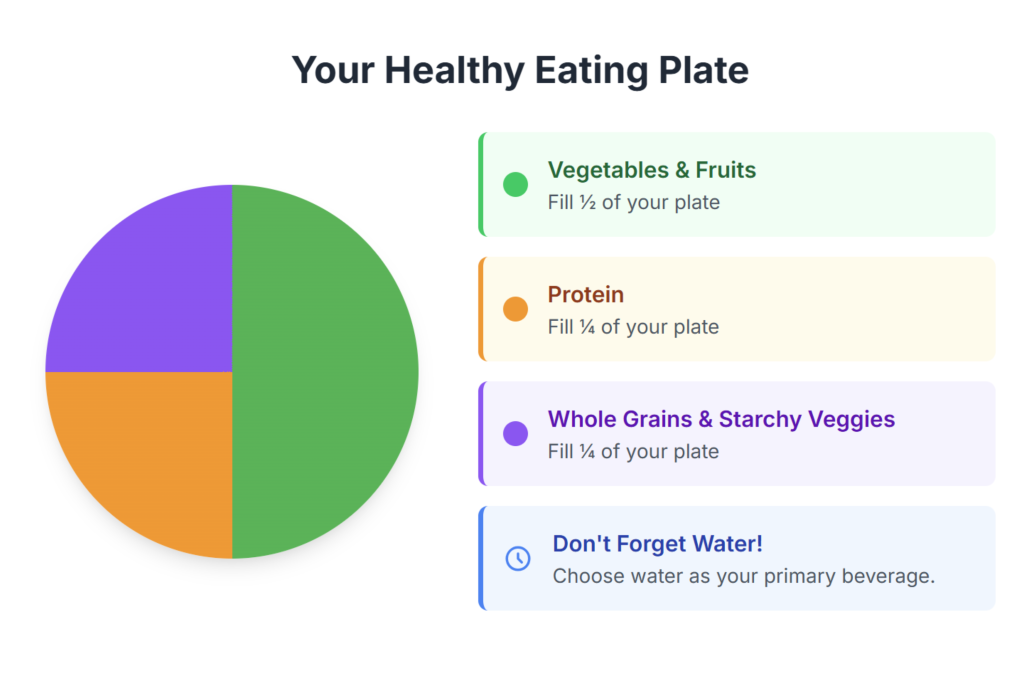
In general, a balanced meal involves a well-proportioned mix of foods from five major food groups- vegetables, fruits (preferably whole fruits), whole grains, dairy products and protein. So, eating a healthy, balanced meal would mean eating a variety of different foods in the right proportions.
The national dietary framework of Canada, however, focuses more on proportions and the quality of food choices. This means actively incorporating fresh produce into every meal, choosing whole-wheat breads and pasta over their white counterpart, and consciously opting for ‘leaner’ cuts of meat.
A balanced diet is about forming a healthier relationship with food, moving away from rushed and mindless consumption.
Why is a Balanced Meal Plan Important?
Research suggests that our food intake is a core determinant of our individual physical and mental health and the prevention of future diseases. Eating a balanced meal is not just about satisfying hunger. It is about providing the body with the precise nutrients it needs to function optimally, prevent diseases and stay fit.
While many Canadians aspire to eat healthily, daily life dictates otherwise. Here are crucial reasons why a balanced diet plan is important for everybody, whether you are grabbing a quick lunch downtown or preparing a family meal.
Fuels your body with the right nutrients and energy
Our bodies need a constant supply of energy and nutrients to perform every basic function every day, from breathing to blood circulation and physical activity. Eating a balanced meal ensures your body receives a steady release of energy throughout the day through macronutrients like carbohydrates, proteins and fats. A balanced diet rich in fruits, vegetables, lean proteins and healthy fats ensures we consume vital nutrients (vitamins and minerals).
It helps avoid sluggishness and fatigue, often associated with a poor diet.
Prevents chronic diseases
A balanced diet can significantly reduce the risk of chronic diseases. It helps you:
- Prevent heart diseases and lower blood pressure
- Lower the risk of type 2 diabetes
- Promote healthy bones and teeth
A diet rich in fibre, antioxidants and essential fatty acids can help reduce the risk of diseases in the future.
Maintains physical and mental well-being
Besides preventing diseases, a balanced meal plan is also integral to our daily quality of life. It helps with:
- Weight management- A nutrient-dense diet helps maintain a healthy weight and boost metabolism.
- Better physical performance- Proper nutrition provides fuel for your muscles and tissues.
- Improved brain function and mental health- Balanced food has been shown to improve mood, memory and concentration.
- Stronger immune system- Certain vitamins and minerals strengthen the immune system, helping the body fight off infections and illnesses.
- Better sleep quality- Specific nutrients regulate sleep patterns, contributing to more restful and restorative sleep.
Overall, eating a balanced meal acts as a powerful tool for building a resilient body, a sharp mind and a future with reduced risk of chronic illnesses. Make conscious and informed food choices under the guidance of a registered dietitian to invest in your long-term health and vitality.
What are the Components of a Healthy Diet?
Health Canada’s Food Guide recommends a simple yet effective approach to maintaining a balanced diet:
- Half of your plate should be filled with vegetables and fruits
- A quarter of your plate with whole grains
- A quarter of your plate with protein foods
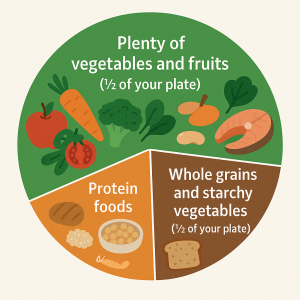
Let’s understand what each food group means for you and how you can incorporate them easily into daily meals.
Vegetables and Fruits (Half Your Plate)
Pack your diet with a mix of different fruits and vegetables, making the most colourful part of your plate. It can be challenging to incorporate vegetables into the largest part of your meal, but it is one of the best things you can do for your health.
What’s included?
You can try out different vegetables (preferably green leafy veggies) such as:
- Broccoli
- Bell peppers
- Carrots
- Spinach
- Kale
- Potatoes
- Corn
- Cucumbers
You can take advantage of fresh produce from farmers’ markets during the summer. Frozen vegetables are also a nutritious option during winter when fresh produce isn’t readily available.
Include seasonal fruits such as:
- Berries
- Banana
- Oranges
- Apples
- Pears
- Grapes
Focus on whole or cut fruits over juice because the former provides more fibre and less concentrated sugar.
How much to include?
It is recommended to consume at least 5 portions of a variety of fruits and vegetables every day. The specific portion size differs slightly by country. However, a widely accepted single portion for an adult is:
- 80 grams of fresh, frozen, or canned fruit or vegetables.
- One medium-sized fruit, such as an apple, banana, orange, or pear.
- Two small fruits, like plums, kiwis, or apricots.
- A large slice of a bigger fruit, such as a slice of melon or pineapple.
- A handful of small fruits, like a cup of grapes or a handful of berries.
- Three heaping tablespoons of cooked vegetables, such as spinach, carrots, peas, or cauliflower.
- A dessert bowl of salad.
The portion sizes can differ based on your individual needs. A registered dietitian in Brampton can guide you on the right portion size for better outcomes.
Why are they important?
Fruits and vegetables are the main sources of vitamins, minerals and fibre. These sources are linked to a lower risk of heart disease and even stroke. The fibre content in these foods facilitates digestion and helps you feel full and satisfied.
Whole Grains (Quarter of your plate)
Whole grains contain all three parts of the grain kernel, unlike the refined ones. The three parts of the grain, namely the bran, germ and endosperm, consist mostly of fibre and essential nutrients. Thus, it is important to choose ‘whole’ grains and make them a quarter of your daily diet.
What’s included?
Common whole grains you can easily find in Canada:
- Oats/Oatmeal
- Brown & wild ice
- Quinoa
- Barley
- Whole grain pasta
- Bulgur
- Buckwheat
- Popcorn
Why is it important?
Consuming whole grains ensures you get the entire nutritious value and fibre content of the grain. It helps you maintain a healthy weight, control blood sugar levels and promote digestion. Most Canadians get only half of the recommended amount of fibre. Whole grains can play an excellent role in bridging the gap.
Additional Tips:
- Look for the words ‘whole grain’ in the ingredient list.
- Brown bread is not always whole wheat. Terms like multigrain or 100% wheat don’t guarantee the product is whole grain.
- Check the Whole Grain Stamp that helps Canadians identify products with significant amounts of whole grains.
How much to include?
A typical example of a quarter plate:
- A serving of brown rice or quinoa.
- One or two whole-wheat chapatis/flat breads.
- A bowl of oatmeal.
- A whole-grain bread sandwich.
25% of your plate should have whole grain foods at every meal. The total amount of grains you need depends on your age, sex, and activity level. Talk to your dietitian to know the right proportion of whole grains for yourself.
Protein (Quarter of your plate)
Proteins build, repair and heal everything in your body, from muscles to skin. While both animals and proteins are sources of protein, Canada’s Food Guide recommends a crucial emphasis on plant-based proteins for the best health outcomes.
What’s included?
Plant-based proteins
- Beans (black beans and chickpeas)
- Tofu
- Edamame
- Nuts
- Seeds
Animal-based proteins
- Chicken
- Turkey
- Fish
- Shellfish
- Eggs
- Lean cuts of beef and pork
How much to include?
While the ‘quarter’ plate is a general recommended rule, adults over 19 benefit mostly from an intake of 0.8 grams of protein per kilogram of body weight. Proteins should make up about 10-35% of your total daily calories.
For example, a person weighing 68 kg (150 lbs) would need about 54 grams of protein daily. This can vary based on age, activity level, and health status, with more active individuals and older adults potentially needing more.
Why is it important?
- Building and repairing tools- Our bodies are in a constant state of repair and regeneration. Protein provides the raw materials needed for this continuous work.
- Tissue repair- Our body uses protein to heal and rebuild damaged tissues.
- Preserves muscle mass– A protein-rich diet helps counteract the muscle mass that happens naturally in our bodies.
- Hormone regulation- Most hormones, which regulate everything from mood to metabolism, are proteins.
- Stable blood sugar levels– When eaten with carbohydrates, protein slows down sugar absorption levels into the bloodstream.
Choose lean cuts of meat and skinless poultry. Try to consume at least 2 portions of fish per week. It is even better if one of them is an oily fish like salmon, rich in omega-3 fatty acids.
Dairy Products and Alternatives
Dairy is now a part of the broader ‘Protein Foods’ category in the latest Canada’s Food Guide. The quarter of your plate that you fill with proteins can also include dairy and its alternatives. Dairy intake is important because they are a major source of various nutrients, including calcium. Calcium is responsible for maintaining strong bones and teeth. You can also consume dairy alternatives instead, such as soy, oat or almond drinks.
What’s included?
Go for lower-fat and unflavored dairy options that can reduce your intake of saturated fat and added sugars. Some options include:
- Milk(lower fat)
- Yoghurt
- Cheese(lower fat)
- Kefir
If you are lactose intolerant or prefer a plant-based diet, here are some alternatives to dairy:
- Soy milk
- Almond milk
- Oat milk
- Pea milk
- Coconut milk
- Tofu
How much to consume?
In Canada, dairy is generally considered a part of the protein intake from a balanced meal. So, some days you can choose dairy or its alternatives to fill the protein quarter of your plate, allowing flexibility in your daily meals. You may have a dairy-based food at one meal and a plant-based protein at another.
Why is it important?
Dairy and alternatives provide a wide range of key nutrients essential for good health at all life stages. Here are the nutrients we get:
- Calcium- Excellent for strong bones and teeth.
- Vitamin D- Vital for the absorption of calcium.
- Protein- Essential for building and repairing tissues.
The right proportion of dairy provides other key nutrients as well, like vitamin B-12, riboflavin, zinc and magnesium. You can incorporate dairy into your meal by using low-fat milk in soups and smoothies. Adding yogurt to your breakfast or a small portion of cheese with fruit during snack time is also healthy.
Table 1: A Summary of Balanced Diet Components
| Type | Example | Portion | Importance |
| Vegetable | ● Broccoli
● Bell peppers ● Carrots ● Spinach ● Kale ● Potatoes |
At least 3 portions of a variety of vegetables every day. | Fruits and vegetables are the main sources of vitamins, minerals and fibre. These sources are linked to a lower risk of heart disease and even stroke. The fibre content in these foods facilitates digestion and helps you feel full and satisfied. |
| Fruit | ● Berries
● Banana ● Oranges ● Apples ● Pears ● Grapes |
2 portions of a variety of fruits every day | |
| Whole Grains | ● Oats
● Brown/wild rice ● Quinoa ● Barley ● Whole grain pasta ● Bulgur ● Buckwheat ● Popcorn |
A quarter (25%) of your plate at every meal. This could be a serving of brown rice or a bowl of oatmeal.
|
Whole grains provide fibre and essential nutrients. The right amount helps maintain a healthy weight, controls blood sugar, and promotes digestion. |
| Protein | Plant-based:
● Beans ● Tofu ● Edamame ● Nuts ● Seeds Animal-based: ● Lean meats (chicken, turkey, beef, pork) ● Fish ● Shellfish ● Eggs |
A quarter (25%) of your plate, which is approximately 2-3 protein portions per day. Generally, adults need 0.8g of protein per kg of body weight (10-35% of total daily calories).
|
Protein-rich foods build, repair, and heal body tissues, from muscles to skin. It helps preserve muscle mass, regulates hormones, and stabilizes blood sugar. |
| Dairy & Alternatives (Part of Protein) | Dairy:
● Lower-fat milk ● Yogurt ● Cheese ● Kefir Alternatives: ● Soy, almond, oat, pea, and coconut milk ● Tofu |
Dairy is considered part of the protein quarter of your plate. You can choose dairy or alternatives to fill this portion, allowing for flexibility. | Dairy is a major source of calcium for strong bones and teeth. Both dairy and its alternatives provide essential nutrients like Vitamin D, protein, Vitamin B-12, and zinc.
|
A Balanced Diet Chart for Adults
A balanced diet looks a little different for everyone based on age, activity level, health conditions and even personal taste. We are lucky to enjoy such a diverse range of foods and lifestyles in Canada. It is important to choose the right foods among the vast options that work for you. This chart isn’t a rigid rulebook. It is a flexible guide to help you make informed choices every day.
| Meal | Food Examples | How does it fit Canada’s Food Guide? |
| Breakfast | Hearty Oatmeal with Berries and Nuts
● 1 cup of mixed berries (fresh or frozen) ● ½ cup of cooked oatmeal ● ¼ cup of walnuts or almonds ● A glass of milk or a fortified soy beverage on the side |
½ Plate: The berries make up half the meal. ¼ Plate: The oatmeal provides the whole grains. ¼ Plate: The nuts and milk/soy beverage supply the protein. |
| Lunch | Chicken and Veggie Quinoa Bowl
● 1.5 – 2 cups of mixed raw vegetables (spinach, bell peppers, tomato, cucumber) ● ¾ – 1 cup of cooked quinoa ● 75g of grilled, chopped chicken breast ● Light vinaigrette dressing |
½ Plate: A large portion of mixed, colourful vegetables. ¼ Plate: Quinoa serves as the whole grain base. ¼ Plate: The grilled chicken provides lean protein. |
| Dinner | Salmon with Roasted Vegetables and Wild Rice
● 2 cups of roasted vegetables (broccoli, carrots, asparagus) ● ¾ – 1 cup of cooked wild rice blend ● 75g fillet of baked or pan-seared salmon |
½ Plate: A generous helping of roasted vegetables. ¼ Plate: The wild rice blend provides the whole grains. ¼ Plate: Salmon is a heart-healthy protein source. |
| Snacks | Nutrient-Rich Options
● An apple with a tablespoon of peanut butter ● Baby carrots with hummus ● A small bowl of plain Greek yogurt with fruit ● Whole grain crackers with a few cubes of cheese |
Snack ideas should also aim to combine food groups. For example, fruit (vegetables & fruits) with peanut butter (protein) or crackers (whole grains) with cheese (protein). |
Table 2: Example of Balanced Diet Chart for Adults
Wrapping Up
A balanced diet isn’t just about a restrictive diet. Instead, it is a vital practice of self-care. Fill half of your plate with fruits and vegetables and the rest of the plate with proteins and whole grains. It involves:
- Personalizing portion sizes and nutrient intake to align with an individual’s age, gender and goals.
- Building meals around diverse fruits, vegetables and whole grains.
- Incorporating a variety of lean protein sources.
- Choosing healthy, unsaturated fats like nuts, seeds and olive oils.
- Minimizing intake of ultra-processed foods, added sugar and excess sodium.
A balanced diet is deeply personal. Listen to your body and adapt based on your needs and goals. Talk to a dietitian to create a personalized plan that can contribute to your lasting energy and overall well-being.
APA Referencing
| Source | APA 7th Edition Reference |
| PMC Article | Abrar, S., Sabir, S., Gulzar, F., Aslam, H., Ayaz, A., Naeem, M., & Hussain, I. (2023). Impact of unbalanced diet on health. Cureus, 15(11), e49568. https://doi.org/10.7759/cureus.49568 |
| Statista | Statista Research Department. (2024, February 21). Share of Canadians reporting being diagnosed with high blood pressure from 2001 to 2023. Statista. https://www.statista.com/statistics/434103/share-of-canadians-reporting-being-diagnosed-with-high-blood-pressure/ |
| Canada’s Food Guide | Health Canada. (2019). Canada’s food guide. Government of Canada. https://food-guide.canada.ca/en/ |
| CDN Science Publishing | Lang, A., & Anand, S. S. (2022). A healthy diet for all Canadians. Applied Physiology, Nutrition, and Metabolism, 47(6), i–iii. https://doi.org/10.1139/apnm-2021-0415 |
| ResearchGate | Khan, M. A. (2018, December). Food and Health [Conference paper presentation]. International Conference on Gastronomy, Food and Nutrition, Istanbul, Turkey. ResearchGate. https://www.researchgate.net/publication/329802167_Food_and_Health |
| American Heart Association | American Heart Association. (2024, March 21). How can I eat more nutrient-dense foods? American Heart Association. https://www.heart.org/en/healthy-living/healthy-eating/eat-smart/nutrition-basics/how-can-i-eat-more-nutrient-dense-foods |
| NCBI Bookshelf | Institute of Medicine (US) Committee on Nutrition Services for Medicare Beneficiaries. (2000). The role of nutrition in the health of the elderly. In The role of nutrition in maintaining health in the nation’s elderly: Evaluating coverage of nutrition services for the Medicare population. National Academies Press (US). https://www.ncbi.nlm.nih.gov/books/NBK20414/ |
| Mayo Clinic Health System | Mayo Clinic Health System. (2024, January 23). Support your immune function with good nutrition. Mayo Clinic Health System. https://www.mayoclinichealthsystem.org/hometown-health/speaking-of-health/support-your-immune-function-with-good-nutrition |
| National Sleep Foundation | National Sleep Foundation. (2024, March). The link between nutrition and sleep. National Sleep Foundation. https://www.thensf.org/the-link-between-nutrition-and-sleep/ |
| Canada.ca (Fibre) | Health Canada. (2019, January 22). Fibre. Government of Canada. https://www.canada.ca/en/health-canada/services/nutrients/fibre.html |